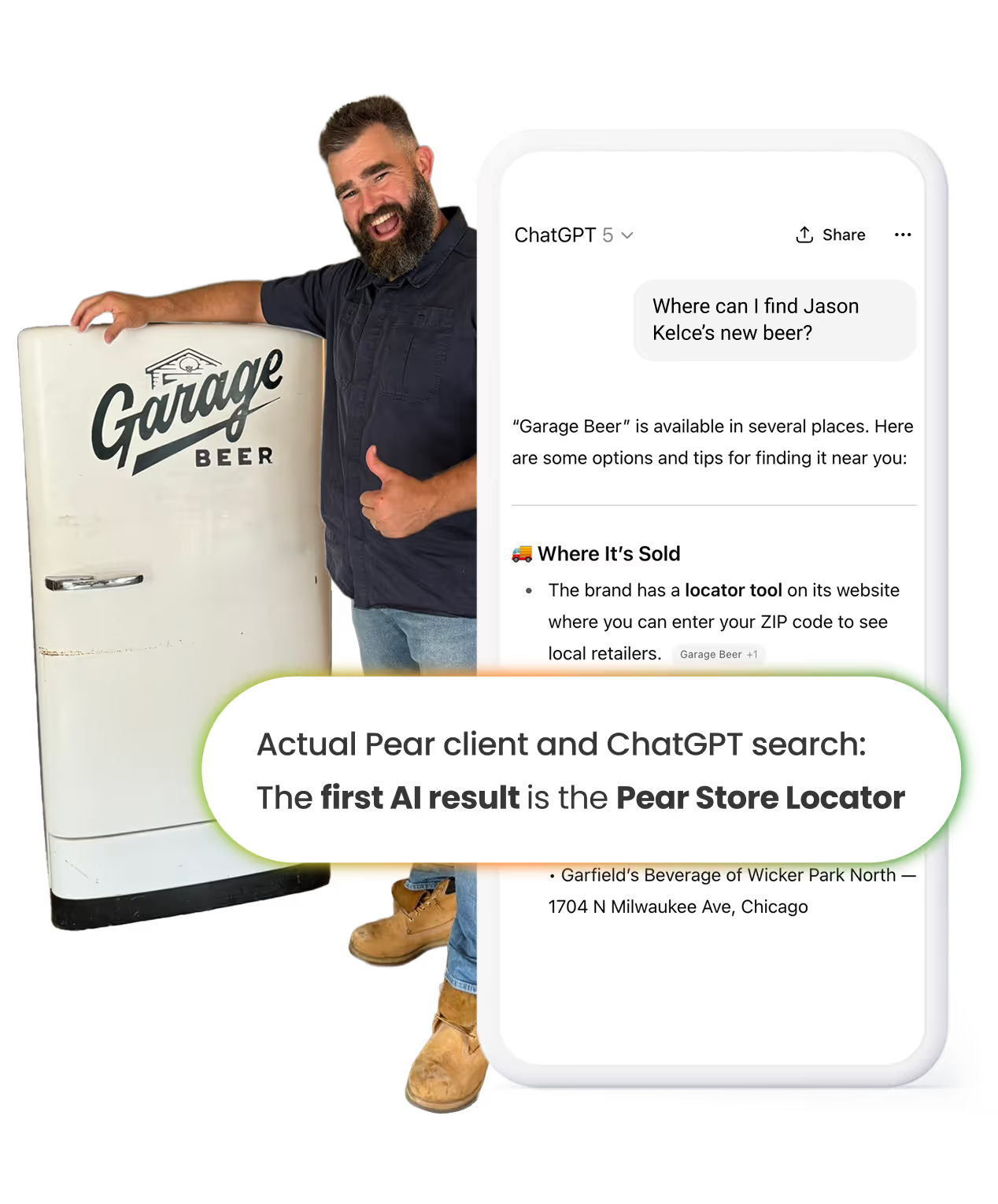
Boost your CPG brand's visibility in AI search

AI search tools like ChatGPT, Google’s SGE, and Perplexity are reshaping how shoppers discover CPG products.

To show up in these results, brands need Generative Engine Optimization (GEO): the practice of improving your visibility across AI-powered search experiences.

Pear gives brands the data, infrastructure, and shoppable experiences needed to rank in AI shopping recommendations.
Get a demo

How Pear can boost your AI authority

AI engines prioritize three things: availability, accuracy, and conversion.

Pear is uniquely built to strengthen each one.

Deep & wide shoppability

AI models surface products that are widely available. A strong retail footprint gives generative engines more confidence that a shopper can actually complete their purchase. Greater availability is interpreted as a signal of reliability and relevance.
pear difference
Pear’s extensive network spans more than 3,000 retailers, including big box stores (which add credibility) and local retailers (which capture the longtail). This helps both AI chatbots and shoppers know exactly where they can buy your products at any moment in time.

Freshness, accuracy, and consistency

Generative engines weigh how current, accurate, and consistent your information is. If product data is stale (wrong price, out of stock), your credibility drops. Worse yet, broken where-to-buy links will result in penalizations.
pear difference
Because Pear provides best-in-class retailer integrations with near real-time inventory, our experiences almost never result in dead-ends or broken experiences.

In a direct UPC comparison scan for a customer, Pear surfaced 440x more verified in-stock products at retail vs a leading competitor.
Conversion signals

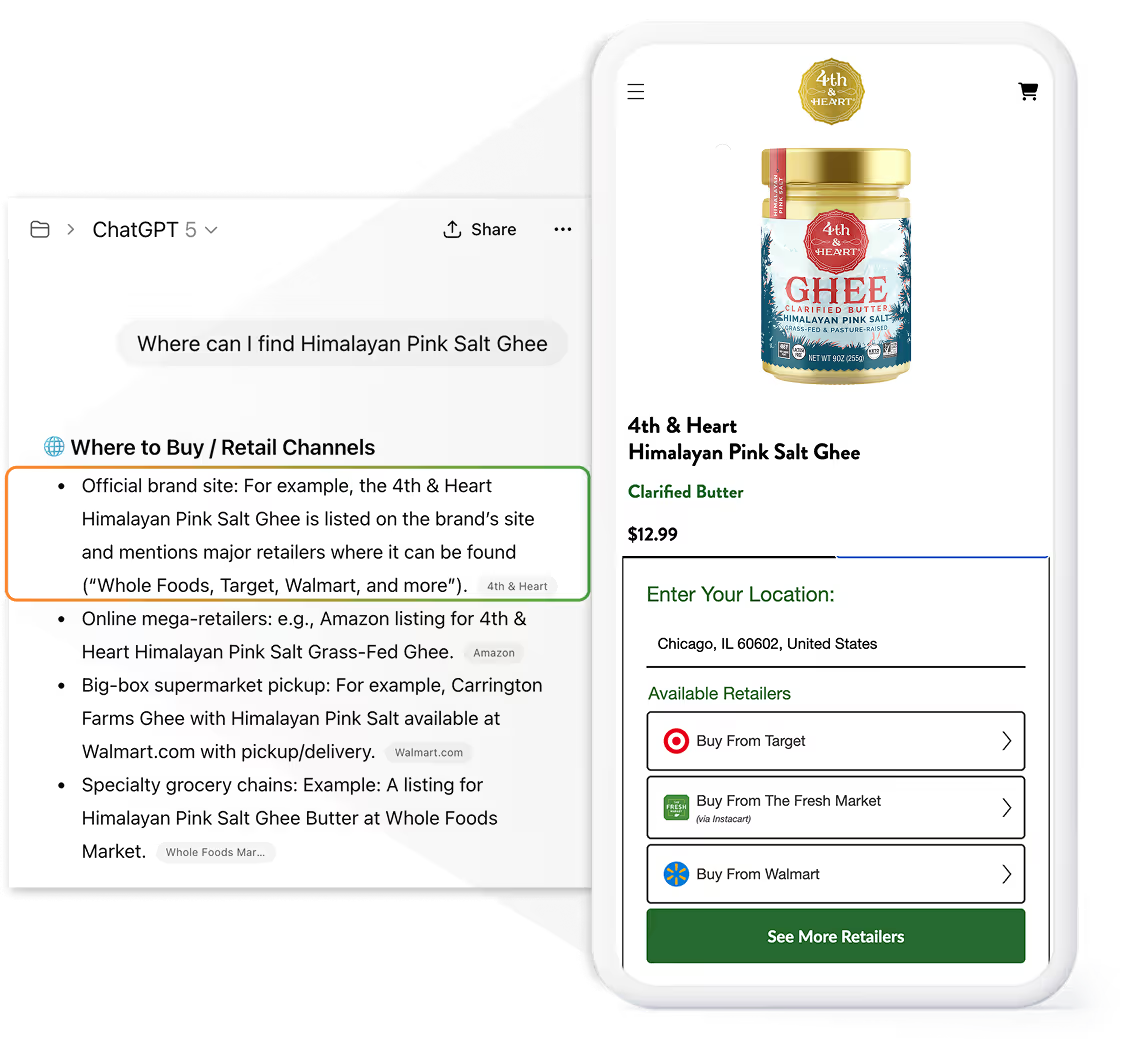
CPG pages that convert well get prioritized in generative search. When shoppers can see exactly which product sizes or flavors are in stock near them (where they’re already engaging), they’re far more likely to convert.
pear difference
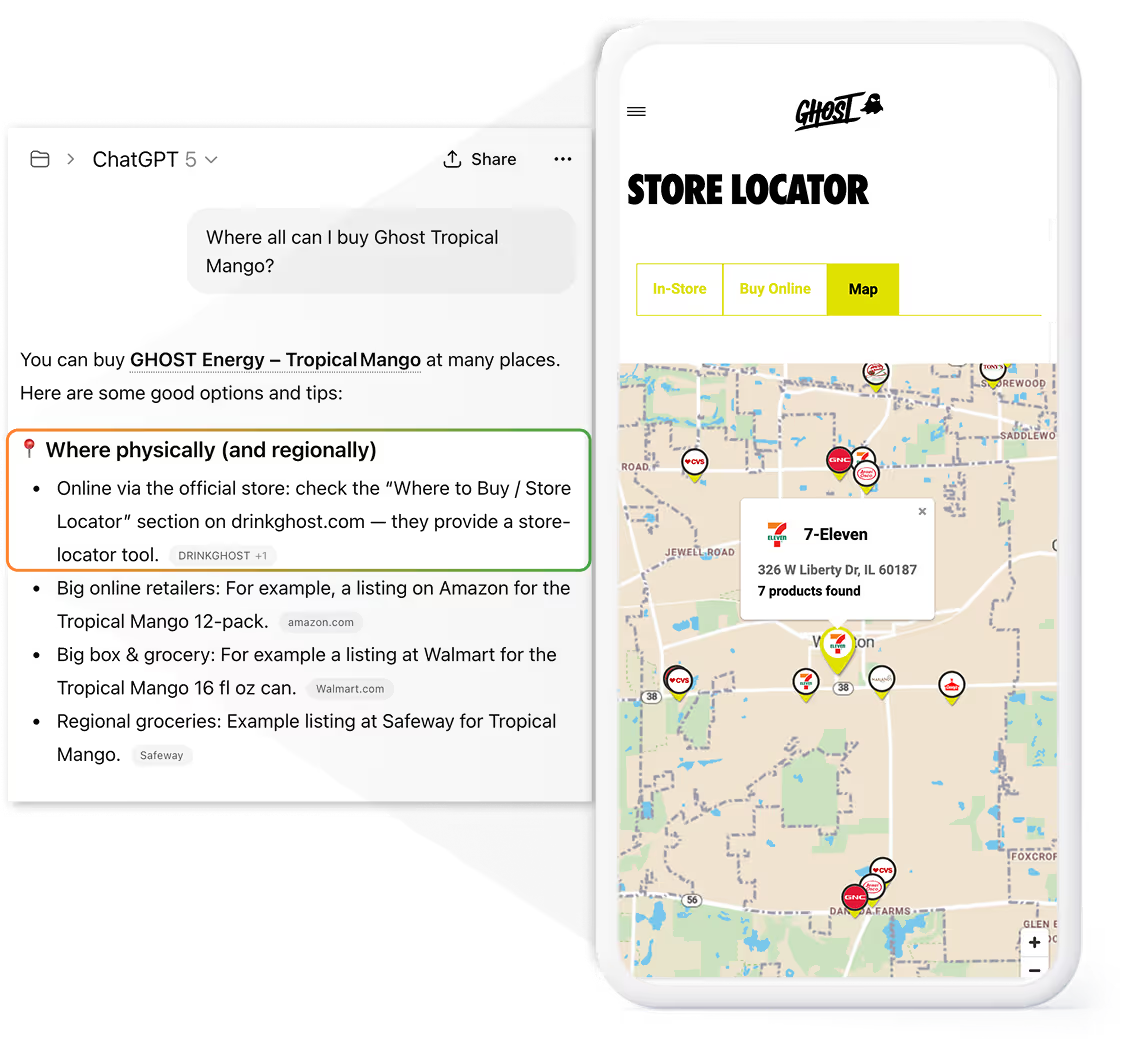
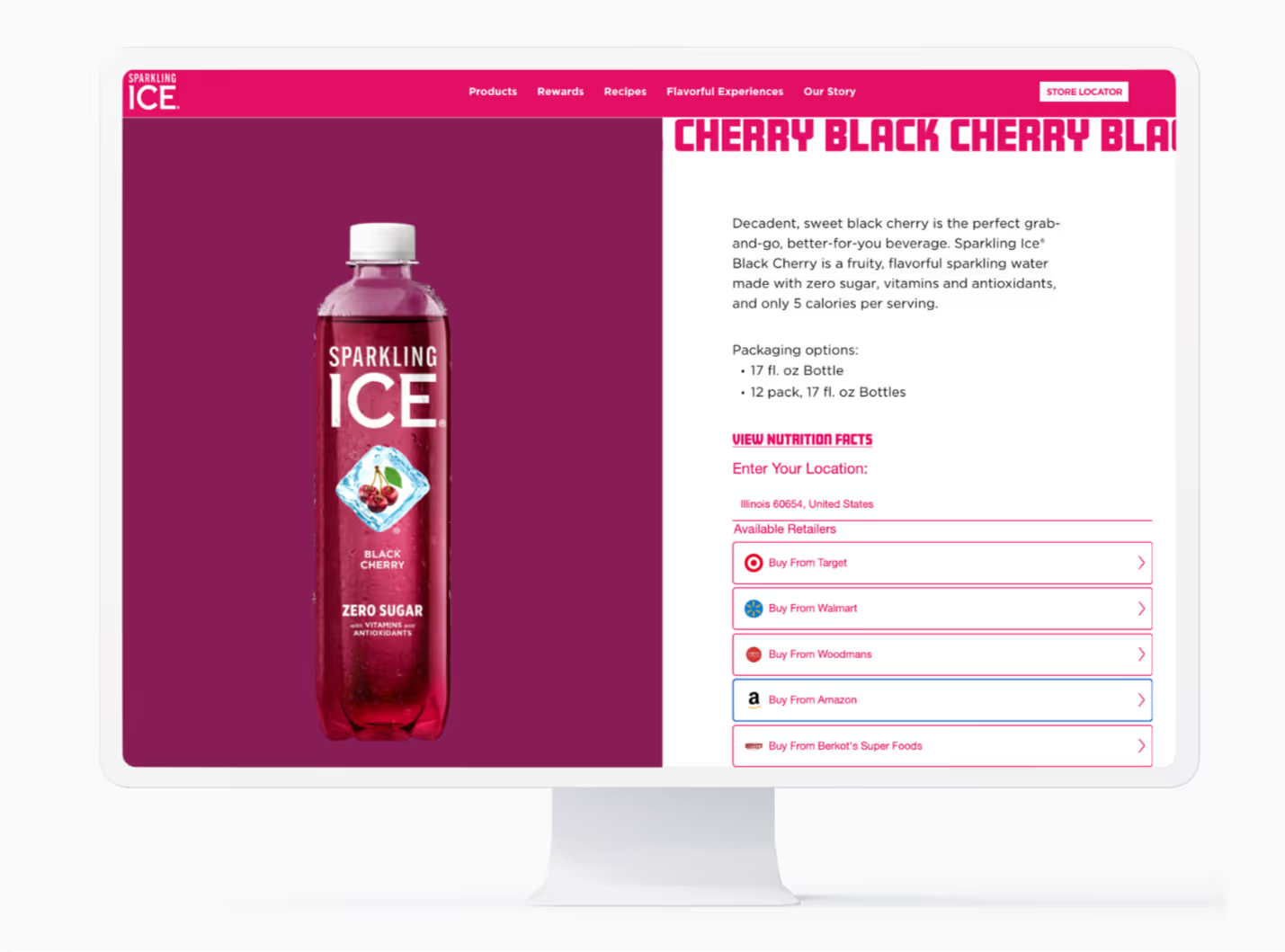
Pear-powered experiences, like Store Locators and embedded shoppability on PDPs, drive strong shopper engagement by delivering inventory-aware retailer options and seamless paths to purchase. This simplified user experience boosts both conversion opportunities and AI authority.
Pear provides the best-in-class technology, tools, and integrations to maximize your generative AI exposure. Learn how >

Tools that strengthen your brand’s GEO & AI discoverability

Drive initial trial at retail
examples
Company type
Emerging
Feature
Dynamically display nearby, in-stock retailers in shopper geos to encourage trial at retail
Pear product
Store Locators
Customize to match your brand
examples
Company type
Established
Feature
Embed in-stock retailer options directly onto existing experiences while keeping brand identity front and center
Pear product
Shoppable PDPS
Create inventory-aware ad impressions
examples
Company type
Established
Feature
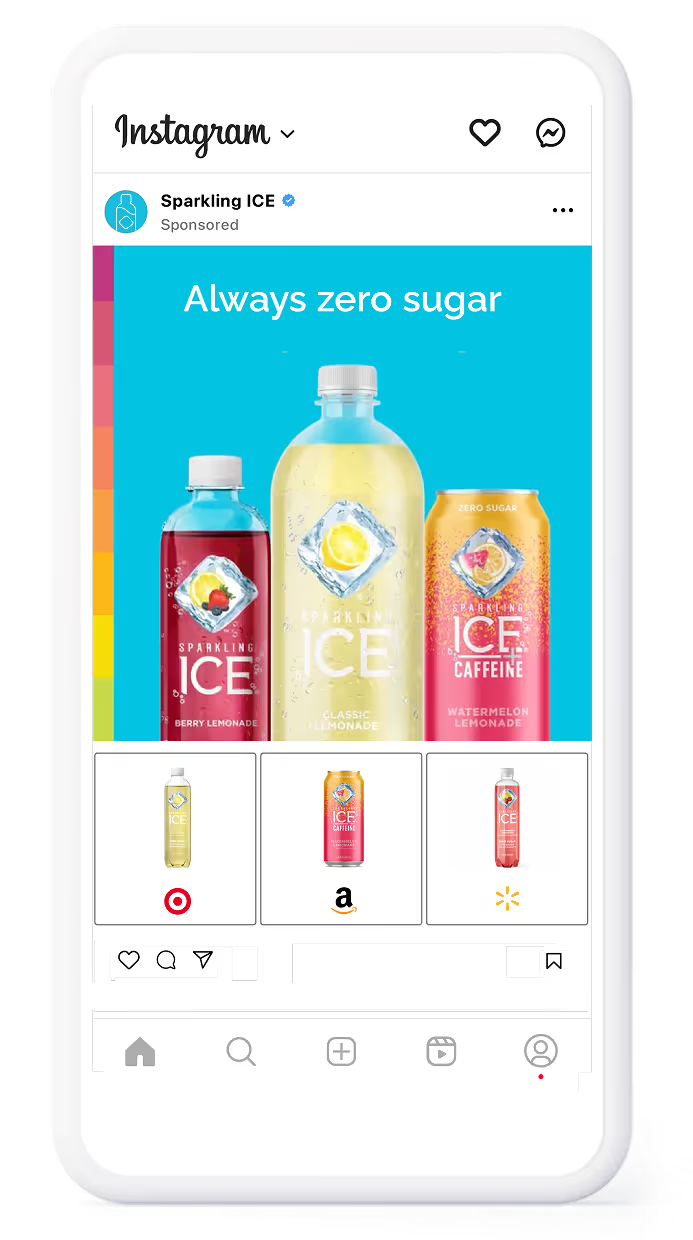
Take shoppers from “this beverage exists” to “this beverage exists, and is available now at my local Target”
Pear product
pear connect
Empower shopper choice
examples
Company type
Enterprise
Feature
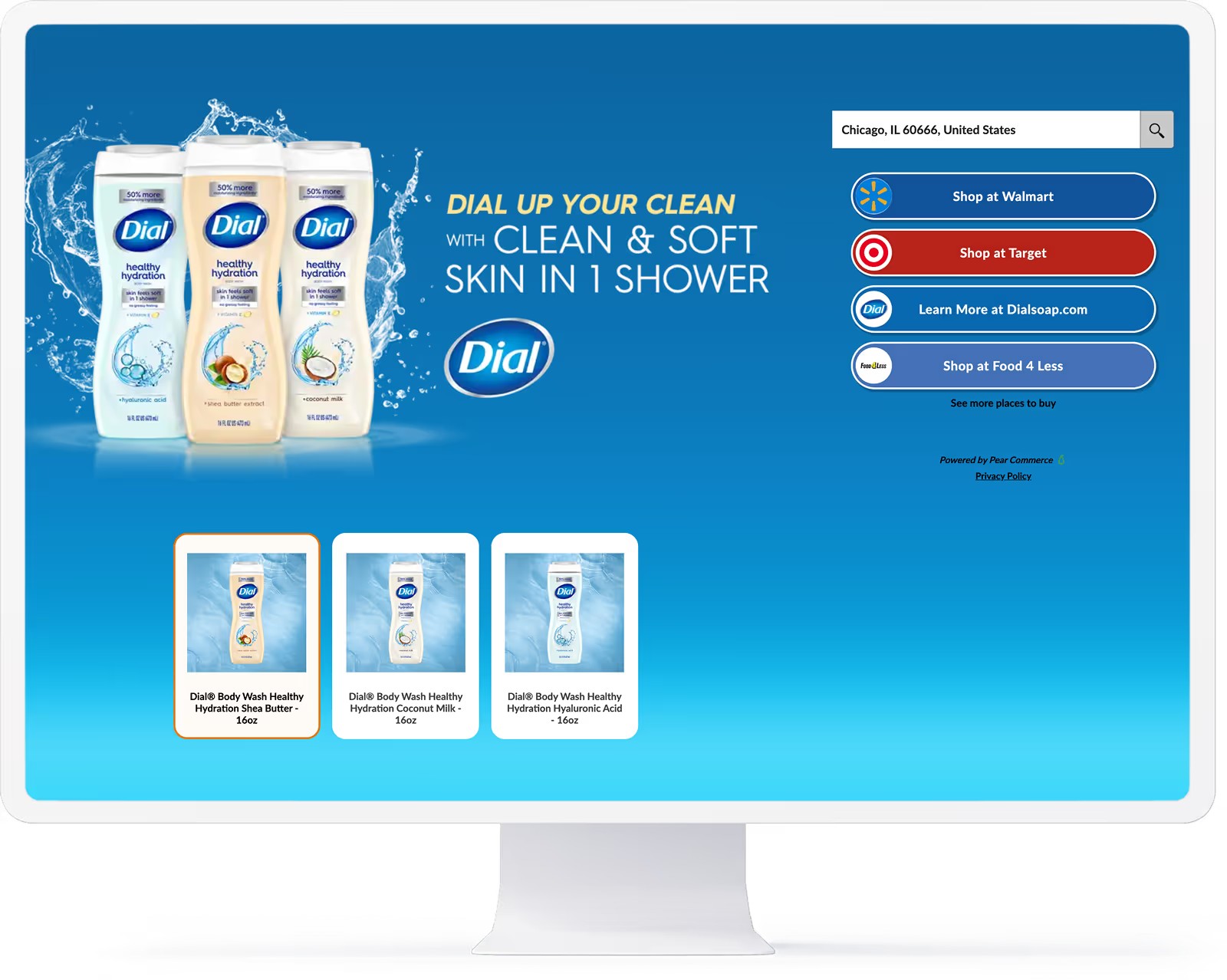
Showcase multiple products and in-stock retailers side by side within your shoppable media
Pear product
Landing Pages
Customize ingredients while keeping yours in cart
examples
Company type
Mid-Market
Feature
Make it easy for shoppers to buy your entire recipe at once through their preferred retailer, and allow swapping for non-brand ingredients
Pear product
Shoppable Recipes

Let’s discuss how we can help your team.

1
How Pear can help you get found in AI searches
2
Your brand’s unique marketing goals
3
Retail discoverability beyond the shelf
Pear is a full-funnel solution. Once you start using it, you’ll find they solve problems you didn’t even know you had.
Tyler E.
Senior Omnichannel Marketing Manager

Request your demo

Your information is secure and protected.
Frequently asked questions

Generative Engine Optimization (GEO) is the process of making your brand’s product information easy for AI models to interpret, validate, and recommend.

It focuses on three core areas:

  1. Understanding intent: Aligning your content with the types of questions AI tools answer.
  2. Structured data: Ensuring your product details are machine-readable and consistent across channels.
  3. Shoppability: Making it easy for AI agents to direct shoppers to legitimate, in-stock purchase destinations.

Where SEO helps you rank in traditional search, GEO helps you show up in AI-generated answers, shopping recommendations, and chatbot responses.

AI search engines surface brands that can deliver a reliable, high-quality shopping outcome. For CPG products, ranking well requires being in stock at multiple retailers, providing accurate, consistent product data, offering clear and immediate ways to buy, demonstrating broad retail distribution, and having credible, structured landing pages AI models can understand.

AI tools aren’t just scanning websites, they’re evaluating whether your brand can fulfill a shopper’s intent. If your product can be confidently recommended, you’re more likely to appear.

Improving AI discoverability starts with reducing uncertainty for the AI model. The cleaner and more verifiable your product footprint is, the more likely you’ll be recommended.

Brands can improve AI discoverability by maintaining consistent product listings across retailers, providing accurate UPC-level information, ensuring shoppable experiences return valid results, keeping availability, pricing, and assortments current, and making sure every product has a clear, unbroken path to purchase.


The goal is to eliminate ambiguity. If an AI assistant can easily verify where your product is sold (and that the shopper can successfully buy it), it will trust and surface your brand far more often.

ChatGPT weighs several behind-the-scenes factors before recommending a product or retailer:

  • Confidence: Is the data credible enough to make a safe recommendation?
  • Availability: Does the product appear to be purchasable in the user’s region?
  • Clarity: Is the destination page structured, relevant, and easy to understand?
  • Outcome likelihood: Will the shopper actually be able to complete the action they asked for?
  • Distribution signal: Are there enough verified retail options to satisfy user intent?

ChatGPT isn’t simply pulling a link. It is predicting which option is most likely to solve the shopper’s problem successfully, based on all the signals it can validate.